Not a fact anymore

Food webs were expected to depend ultimately on photosynthetic primary production powered by sunlight.

What we know now

Some ecosystems do not begin with sunlight. Certain microorganisms can make organic matter using energy released by chemical reactions rather than photosynthesis. This process, called chemosynthesis, can support entire food webs in dark environments such as deep-sea hydrothermal vents.

Why it changed

In 1977, scientists found dense communities of tube worms, clams, and other animals around hydrothermal vents on the Galápagos Rift, far below the reach of sunlight. Researchers later showed that microorganisms there were using chemical energy from vent fluids to make organic matter, providing the base of the local food web.

Status
Overturned
Category
Ocean Science
Accepted for
Not quantified
Accepted approximately
Before the discovery of hydrothermal-vent ecosystems
Changed approximately
1977–early 1980s
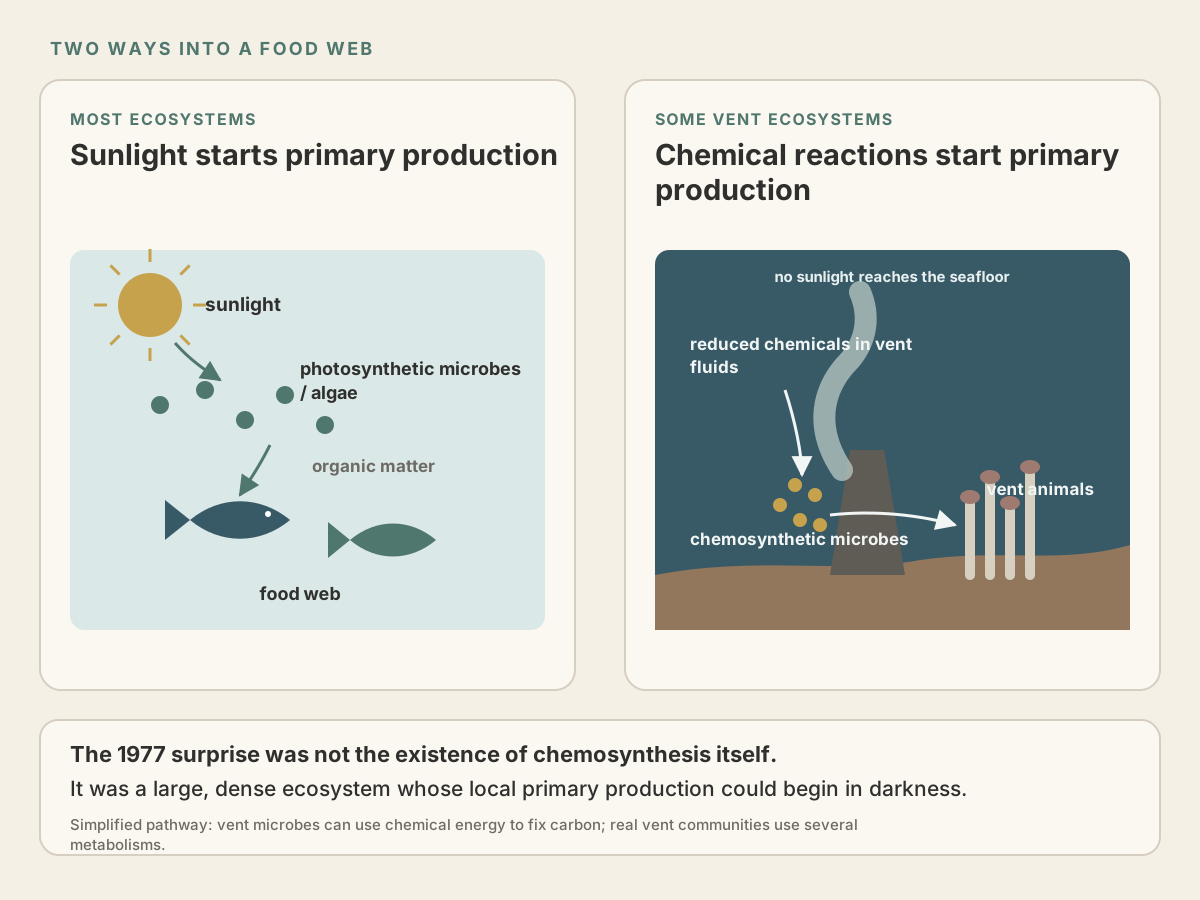
Side-by-side explanatory diagram comparing two routes into a food web. On the left, sunlight powers photosynthetic microbes and algae near the ocean surface. On the right, reduced chemicals in hydrothermal-vent fluids supply energy to chemosynthetic microbes, which support animals on the dark seafloor.

Most food webs begin with sunlight and photosynthesis. At hydrothermal vents, local primary production can instead begin with chemical energy: chemosynthetic microorganisms fix carbon and support dense animal communities in darkness. The diagram shows one simplified pathway; real vent communities use several metabolisms.

Original graphic: Not a Fact AnymoreOriginal graphic

The familiar route into a food web begins with sunlight. Plants and algae use photosynthesis to turn light energy into organic matter. Herbivores eat them, predators eat the herbivores, and even much of the deep sea depends on organic material that eventually sinks down from sunlit waters.

In 1977, scientists exploring the Galápagos Rift found something unexpected. Around deep-sea hydrothermal vents they found dense communities of giant tube worms, clams, and other animals. No sunlight reaches those depths.

The animals were not simply living on an unusually large supply of food falling from above. Microorganisms around the vents were using energy from chemical reactions involving substances such as hydrogen sulfide to make organic matter from carbon dioxide. That process is called chemosynthesis.

Some vent animals feed on these microorganisms; others house them inside their bodies and depend on them directly. In either case, chemical energy from the vent can form the base of the food web.

Chemosynthesis itself was known before 1977. What the vents revealed was how large and complex an ecosystem could be without local photosynthesis. Most ecosystems still depend ultimately on sunlight, but not all of them do.

Evidence

Sources and what they establish

Historical context

Current evidence

  • Chemosynthesis Fact SheetNOAA Ocean Exploration

    Explains chemosynthetic food webs and their discovery at hydrothermal vents in 1977.

  • What is a hydrothermal vent?NOAA National Ocean Service

    Describes vent communities that depend on chemical processes involving seawater and hot magma.

Related entries

Or go somewhere else: