Not a fact anymore

Most of a growing plant's dry mass comes from material absorbed from the soil.

What we know now

Most plant dry mass is carbon fixed from atmospheric carbon dioxide. Soil supplies water and essential mineral nutrients, but usually contributes only a small fraction of the dry matter added during growth.

Why it changed

Early plant nutrition was interpreted through roots and soil, and van Helmont's willow experiment was initially taken to support water as the main source. Quantitative work on gas exchange and photosynthesis later showed that carbon dioxide provides most of the carbon incorporated into plant biomass.

Status
Overturned
Category
Botany
Accepted for
≈2,154 years
Accepted approximately
Antiquity–18th century
Changed approximately
Late 18th–19th centuries
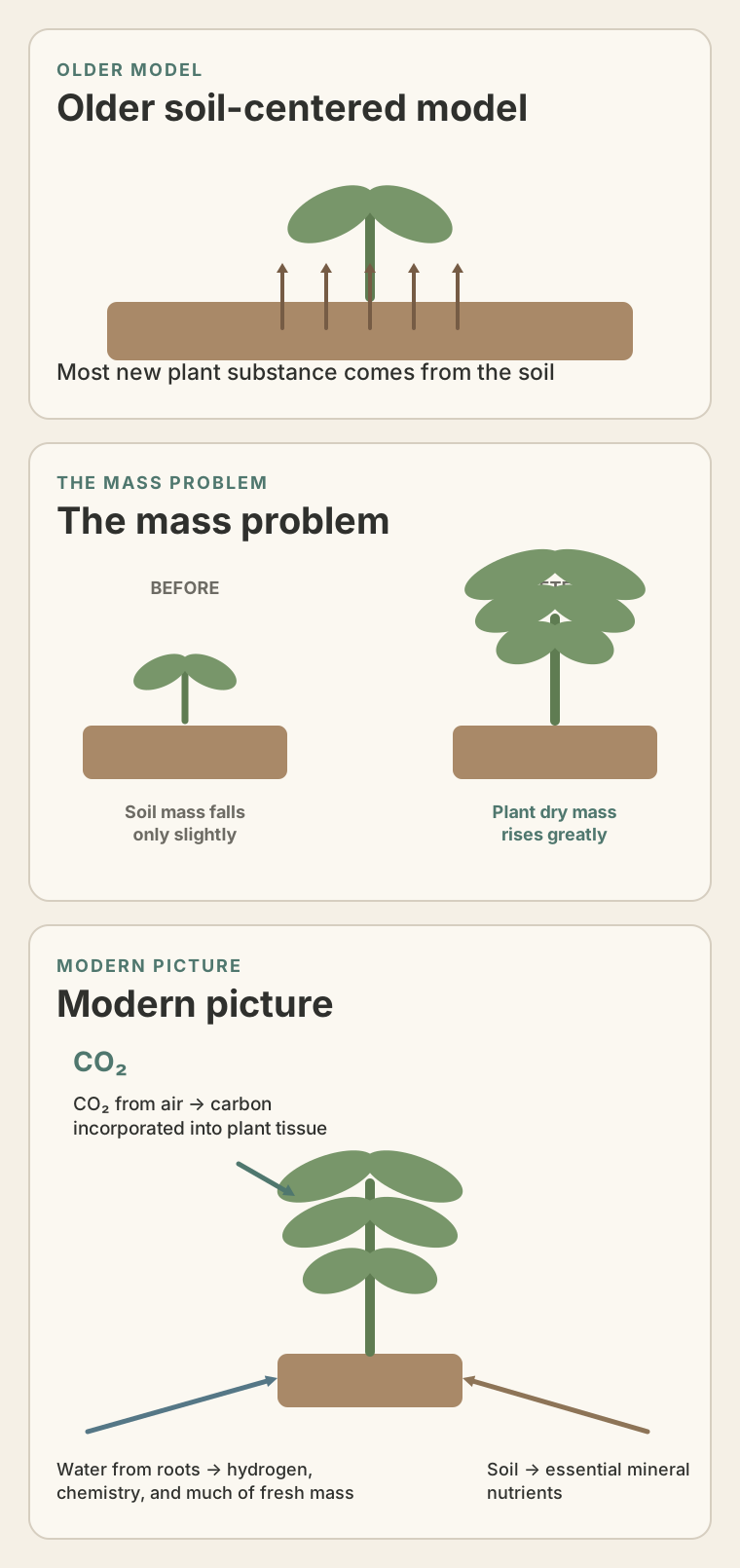
Explanatory diagram comparing a plant and soil before and after growth. The plant gains substantial dry mass while soil mass changes little. Arrows show carbon dioxide entering through the leaves, water entering through the roots, and mineral nutrients coming from the soil.

A growing plant can gain far more dry mass than the surrounding soil loses. Later work showed that the carbon making up much of plant dry matter comes from atmospheric carbon dioxide, while soil supplies essential mineral nutrients and water rather than most of the added dry material.

Original graphic: Not a Fact AnymoreOriginal graphic

The soil idea belonged to a much older theory of plant nutrition than the familiar schoolroom story about van Helmont’s willow tree. Historical work on plant physiology traces an Aristotelian doctrine in which land plants were understood to derive their substance from the soil. Aristotle treated roots as the route by which prepared nourishment entered the plant, while leaves were not yet understood as the major organs of carbon assimilation.

The transition was not a single experiment. Nicholas of Cusa, Jan Baptist van Helmont, Robert Boyle, Stephen Hales, Joseph Priestley, Jan Ingenhousz, and Nicolas-Théodore de Saussure each changed different pieces of the picture. Van Helmont’s famous willow experiment showed that a plant could gain far more mass than the soil lost, but he concluded that water supplied the increase. Hales later suspected that part of plant substance came from the air. Priestley and Ingenhousz connected plants, air, light, and gas exchange; de Saussure helped put plant nutrition on a quantitative chemical footing.

That is why the representative change date is much later than van Helmont. The old soil-centered model changed in stages. It passed through a water-centered model and then through increasingly quantitative studies of air, light, minerals, and carbon chemistry.

Today the key distinction is fresh mass versus dry mass. Water can dominate a fresh plant’s weight, while most of the carbon in its dry matter ultimately comes from atmospheric carbon dioxide. Soil remains indispensable because it supplies water and mineral nutrients.

Evidence

Sources and what they establish

Historical context

Current evidence

  • PhotosynthesisEncyclopaedia Britannica

    Explains how plants use carbon dioxide and water to synthesize carbohydrates that contribute most of their dry biomass.

  • Carbon Dioxide Fixation and PhotosynthesisNCBI Bookshelf

    Describes carbon fixation as the incorporation of atmospheric carbon dioxide into organic plant material.

Related entries

Or go somewhere else: