Not a fact anymore

Large dinosaurs normally walked with upright torsos and their heavy tails dragging along the ground.

What we know now

Most dinosaurs held their tails off the ground as counterbalances, with their spines and bodies in more horizontal, dynamic postures. Routine tail-drag traces are rare in trackways.

Why it changed

Biomechanics, articulated skeletons, trackways, and improved mounting methods showed that the classic kangaroo-like reconstruction was anatomically and behaviorally misleading.

Status
Superseded
Category
Paleontology
Accepted for
≈84 years
Accepted approximately
Late 19th–mid-20th century
Changed approximately
Mid to late 20th century
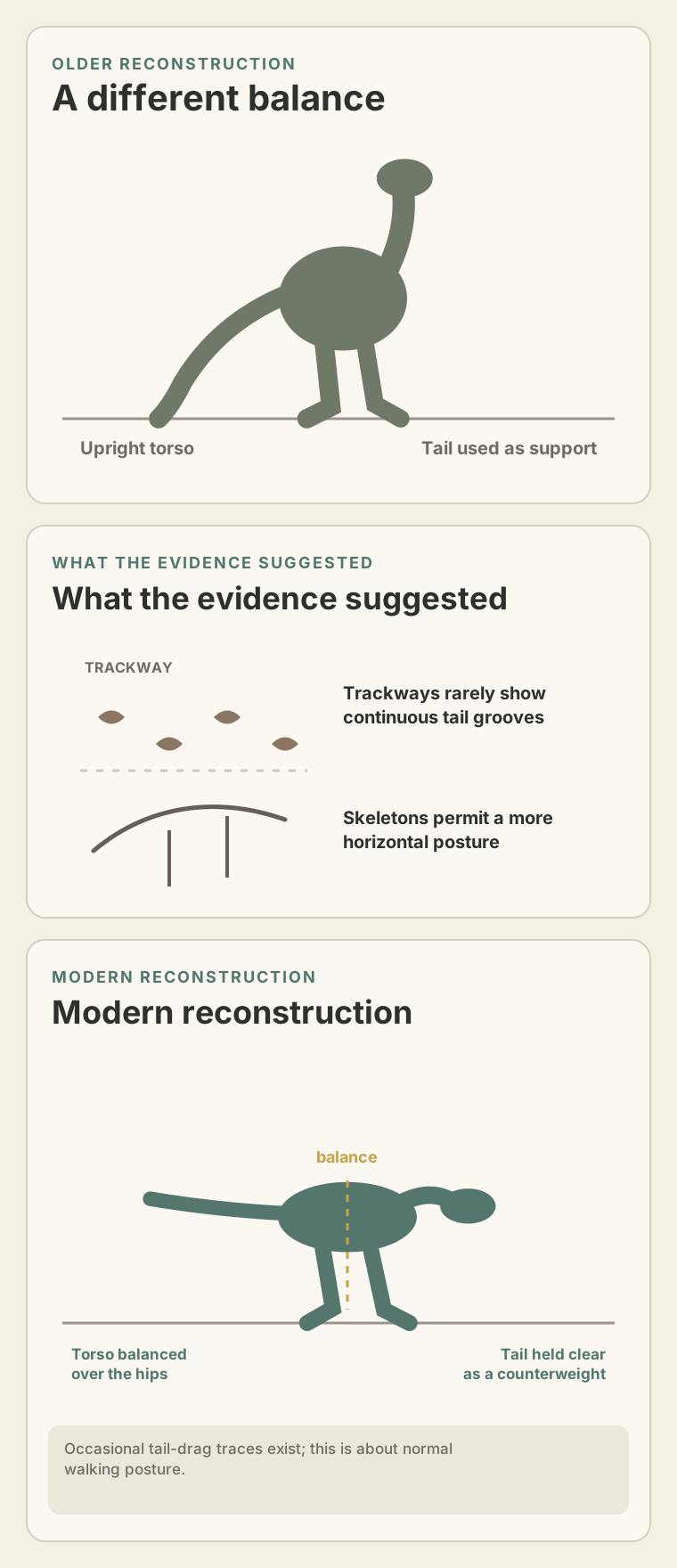
Side-by-side silhouette comparison. The older reconstruction stands nearly upright with its tail touching the ground as a third support. The modern reconstruction holds the torso more horizontally and the tail clear of the ground, balancing the head and body.

Older reconstructions often posed large bipedal dinosaurs almost upright with the tail resting on the ground. Fossil trackways and biomechanical reconstruction instead support a more horizontal, balanced walking posture with the tail normally held clear as a counterweight.

Original graphic: Not a Fact AnymoreOriginal graphic

Early dinosaur skeletons were difficult to reconstruct from incomplete fossils, and large bipeds were often compared with kangaroos. Museum mounts helped make the result iconic: a nearly upright torso, hips low behind the body and a heavy tail resting on the ground as a third support.

The pose became culturally self-reinforcing. Illustrations copied museum mounts, and the mounts in turn made the posture seem anatomically established. Yet articulated skeletons did not require such an erect stance, and fossil trackways produced an awkward question: if dinosaurs routinely dragged enormous tails, why were continuous tail grooves so uncommon alongside their footprints?

Biomechanical reconstruction increasingly placed the spine closer to horizontal, with the tail held clear of the ground as a counterbalance to the head and torso. The dinosaur renaissance of the late twentieth century made this more active, balanced posture familiar, and museums remounted major skeletons accordingly.

Occasional fossil tail-drag marks do exist, so no absolute rule says a dinosaur’s tail could never touch the ground. The change concerns the normal walking posture represented by generations of reconstructions.

Evidence

Sources and what they establish

Historical context

Current evidence

Related entries

Or go somewhere else: